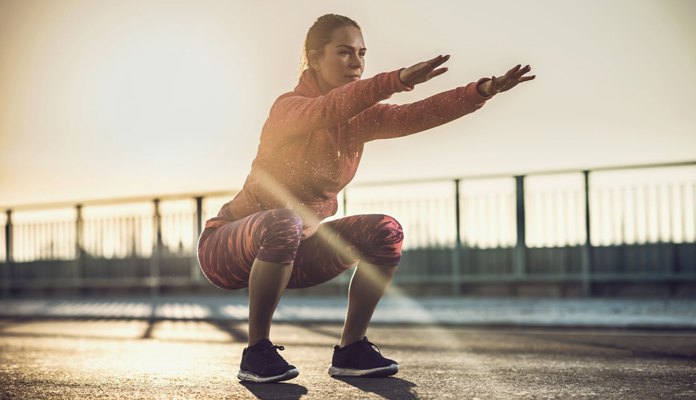

Precautions When Performing Deep Squat
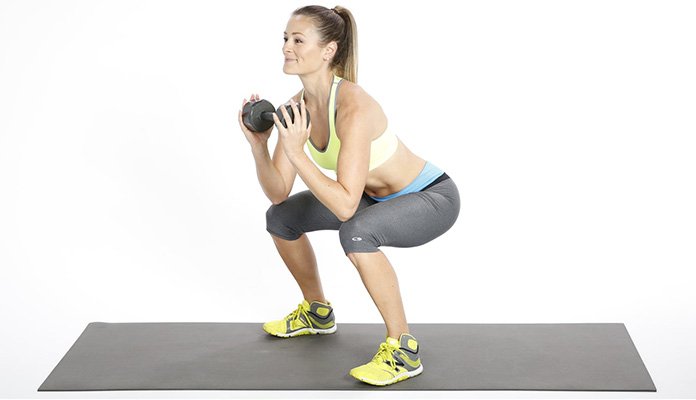
Below are some common errors that people often have when they do a deep squat:
– Knee misalignment: Many people typically have poor strength in their hip rotator and gluteal muscles. As a result, it causes knees to bow inward to each other during descending or ascending. If the knees are not properly aligned, torque at the knee would result in injuries. That’s why people with knee pain should avoid deep squats
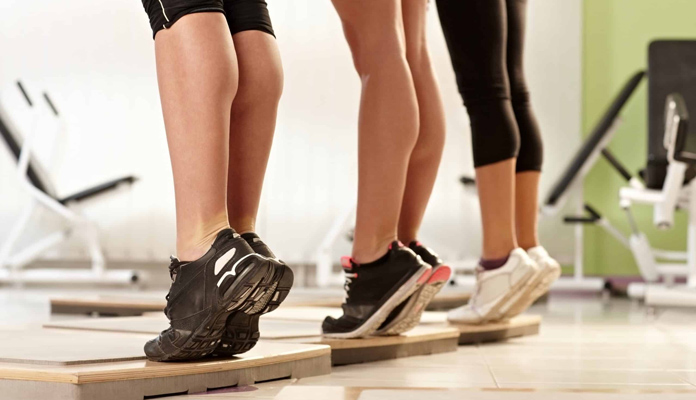
– Heels lifting: During a deep squat, try to keep the feet flat on the floor to improve force production, stability, and balance. Many people find this difficult due to stiff calves and poor flexibility in the ankles. In these cases, try to put a lift under the heels
– Spine bending: Another common problem with a deep squat is bending the spine. During this exercise, it is important to keep this part aligned with the pelvis and straight. The main purpose is to keep balance and reduce the risk of injuries [8]